Exploring hydration as a relationship between nourishment, environment, and the body's natural wisdom.
Summer has arrived early and with force across much of Europe.
As temperatures climb, many of us instinctively reach for another glass of water. While this is certainly important, the longer I work in nutrition and environmental health, the more I realise that hydration is about more than simply replacing fluids.
Water matters.
Electrolytes matter.
But so too do the foods, environments, and daily practices that help us absorb, retain, and use them.
I have come to think of this as a kind of hydration ecology — the idea that many traditional foods and practices support hydration through multiple pathways at once.
A Lesson from Patagonia
One of my most recent lessons in hydration came during an eight-day trek in Patagonia.
Each morning I added a teaspoon or two of chia seeds to my water bottle. It seemed almost too simple to make any difference, yet it worked remarkably well.
When chia seeds absorb water, they form a soft gel around the seed. This gel helps slow the movement of water through the digestive system, encouraging a steadier release and absorption of fluids.
Many people notice that they feel hydrated for longer, experience less thirst, and avoid the sensation of drinking plenty of water yet still feeling strangely dry.
Interestingly, chia was traditionally used by long-distance runners in parts of Central America.
The seeds also contribute small amounts of calcium, magnesium, and potassium, while their fibre, protein, and omega-3 fats help provide a steadier release of energy.
A squeeze of lemon or a small pinch of sea salt can make a simple chia drink even more supportive during hot weather.
When the Body Knows
The experience in Patagonia brought back memories of several earlier journeys.
Years before, after a three-day hike through China's Yellow Mountains, I remember arriving exhausted and overheated at the end of the trail.
Someone handed me a raw cucumber.
To this day, I can still remember that first bite.
It may sound strange, but it felt like one of the most delicious foods I had ever eaten.
I had similar experiences after long treks in Colombia and Cuba, where watermelon, mango, and pineapple seemed almost impossibly refreshing.
These experiences taught me something important: when conditions are demanding, the body often craves exactly what supports it.
Not only water, but foods that bring together hydration, minerals, natural sugars, and the compounds plants have evolved to produce under the same sun we are standing in.
Hydration Is Embedded in Food
What fascinates me most is that traditional cultures rarely separated hydration from nourishment.
Instead, they often combined:
• Water
• Minerals
• Fibre
• Natural carbohydrates
• Plant compounds
• Beneficial microbes
Hydration was embedded within a food matrix.
This perspective changes the question from:
"How do I replace electrolytes?"
to:
"What helps the body remain hydrated, resilient, and able to cope with heat, sunlight, and exertion?"
Summer's Natural Hydration Foods
When we look at traditional summer foods around the world, certain patterns emerge.
Watermelon
Watermelon is approximately 92% water and contains potassium, magnesium, and citrulline.
Citrulline supports nitric oxide production, helping blood vessels relax and assisting circulation and temperature regulation.
Watermelon also contains lycopene, a red plant pigment associated with supporting the skin's resilience against some of the oxidative stress generated by sunlight.
Tomatoes
Tomatoes are another rich source of lycopene.
Interestingly, lycopene becomes more available to the body when tomatoes are cooked and paired with olive oil.
A simple Mediterranean tomato salad contains far more than flavour. It provides water, minerals, antioxidants, healthy fats, and a variety of protective plant compounds.
Gazpacho
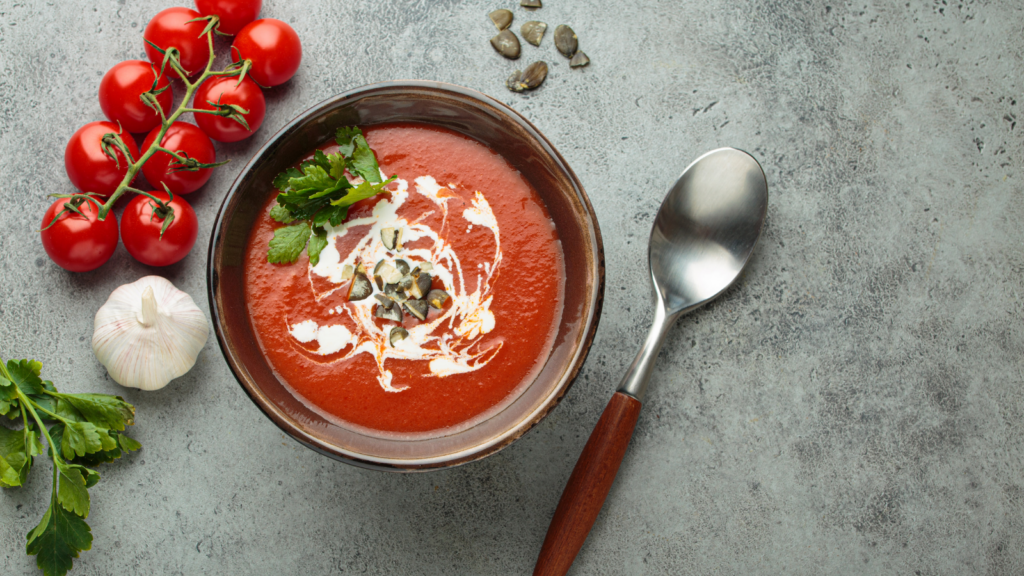
Few foods seem better adapted to summer than gazpacho.
Made from tomatoes, cucumber, peppers, olive oil, herbs, and a little salt, it provides:
• Water
• Potassium
• Magnesium
• Vitamin C
• Lycopene
• Polyphenols
In regions such as Andalusia and the Algarve, gazpacho is almost a physiological response to summer itself.
Other Summer Allies
Many familiar summer foods appear repeatedly across cultures:
• Cucumbers
• Melons
• Peaches
• Strawberries
• Citrus fruits
These foods combine water with minerals, antioxidants, natural sugars, and protective plant compounds.
Traditional yoghurt drinks such as ayran, doogh, and lassi similarly combine water, protein, minerals, and beneficial microbes in ways that support hydration during hot weather.
Supporting the Skin from Within
When we think about heat, we often focus on what we drink.
Yet our skin is our first interface with the environment.
It helps regulate temperature, retain moisture, and protect us from the outside world.
Foods rich in colourful plant compounds — tomatoes, watermelon, berries, peppers, herbs, and leafy greens — provide nutrients that support the skin's natural resilience.
This is not a substitute for sensible sun protection, shade, or appropriate clothing.
Rather, it is another reminder that nourishment and environment are always working together.
What We Wear Matters Too
The conversation about hydration extends beyond food and drink.
During periods of intense heat, clothing can significantly influence comfort and temperature regulation.
Natural fibres such as cotton, linen, hemp, and wool generally allow greater airflow and moisture movement than many synthetic fabrics.
Choosing breathable natural materials can support the body's own cooling mechanisms and help reduce heat stress.
Small choices, repeated daily, often make a larger difference than we realise.
A Gentle Note About Water Bottles
Whenever practical, I encourage the use of glass or stainless-steel bottles, particularly during hot weather.
Heat can increase the movement of substances from plastic into water, especially when bottles spend hours in direct sunlight, a hot car, or a warm backpack.
Choosing glass or stainless steel is a simple way to reduce these exposures while also reducing waste and supporting environmental health.
As with so many aspects of wellbeing, small choices made repeatedly can have a meaningful cumulative effect.
The Bigger Picture
Perhaps the most interesting lesson from traditional summer foods is that they remind us to think in systems rather than single nutrients.
Watermelon is not simply water.
Gazpacho is not simply vegetables.
Chia seeds are not simply fibre.
Together they offer water, minerals, plant compounds, energy, and support for the body's remarkable ability to adapt.
Hydration is not simply a substance.
It is a relationship.
A relationship between water and minerals.
Between food and sunlight.
Between the skin and the environment.
Between our daily choices and our body's capacity to respond.
Sometimes the most effective strategies are not the most technologically sophisticated.
They are the ones that work with the body's natural physiology and the rhythms of the season.